Dr. Samer El-Refaie
President of AAPP, General Secretary of AHDA
Founder & Chairman Phantasy Magazine
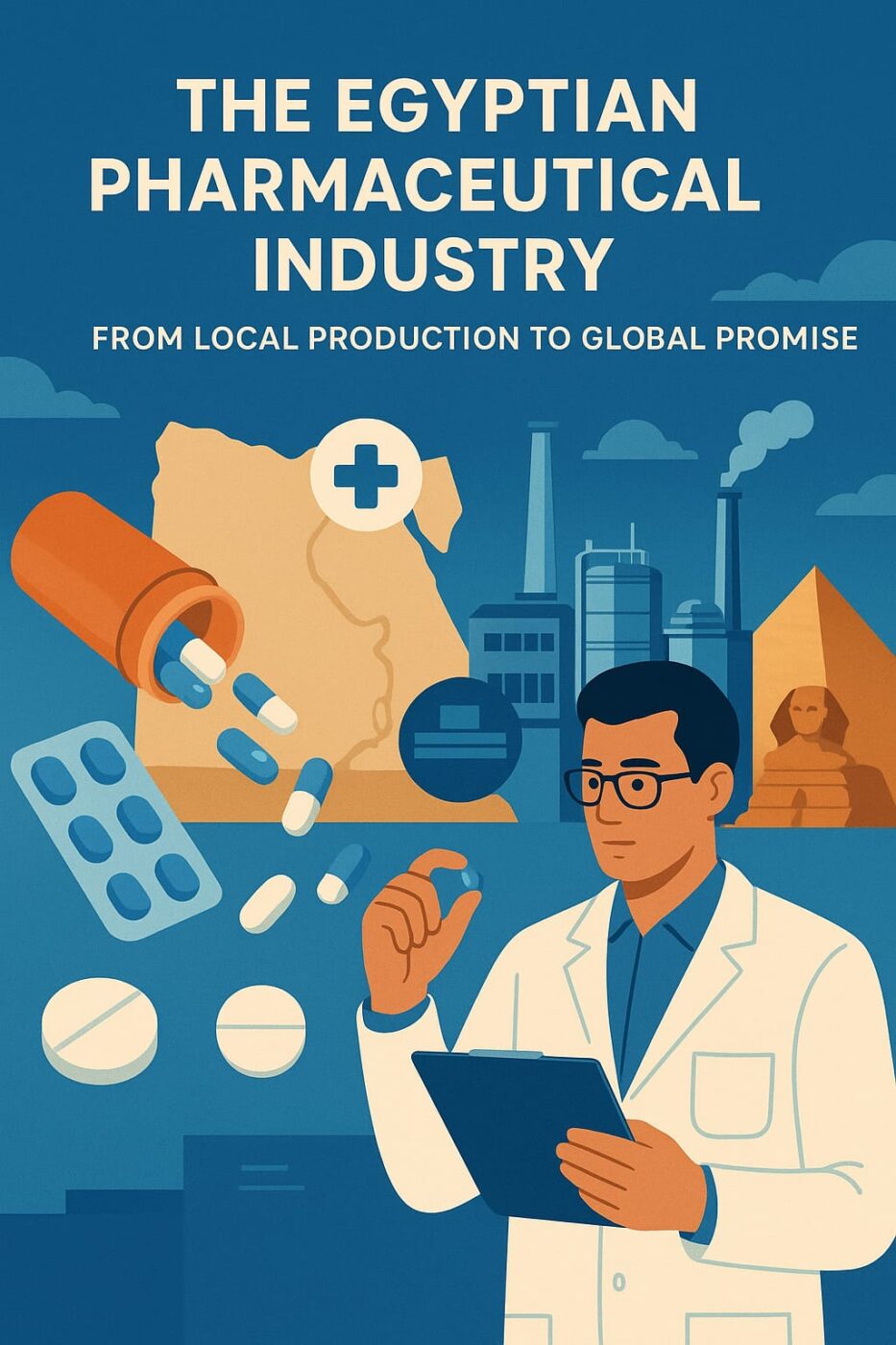
Egypt’s pharmaceutical industry stands today as one of the most dynamic and strategically important sectors in the national economy. It represents a vital pillar of public health security, an engine of industrial development, and a field of continuous innovation. With its long legacy and its expanding capacity, Egypt has the potential to become not only self sufficient in medicine but also a regional hub for pharmaceutical export across Africa and the Middle East.
A Legacy of Strength and Self reliance:
Egypt was among the earliest Arab and African nations to establish a strong pharmaceutical base. Since the 1930s, the country has developed a diversified industrial infrastructure supported by public and private manufacturers. Today, the market includes more than 170 licensed factories and over 700 distribution companies, producing an estimated 1.5 billion medicine packs annually.
Local production covers around 90 percent of the national consumption value, a remarkable achievement that ensures broad access to affordable essential medicines for citizens.
Consumption and Market Dynamics
Egypt ranks among the top ten pharmaceutical markets in the Middle East and Africa, with an estimated market size exceeding 120 billion Egyptian pounds. Prescription drugs represent the largest share of consumption, driven by an increasing population that has surpassed 105 million people. Chronic diseases such as diabetes, hypertension, and cardiovascular conditions continue to dominate healthcare demand.
At the same time, consumer expectations have evolved toward higher quality, innovative formulations, and trusted brands, creating new challenges and opportunities for both local and multinational companies.
Gaps, Shortages, and the Import Equation
Despite this strong base, Egypt still imports several advanced or high technology products, including oncology, immunotherapy, and biotechnology medicines. These categories account for a smaller share of volume but a large share of value. Periodic shortages in some imported products are attributed to supply chain disruptions, global price volatility, and currency fluctuations.
However, recent national strategies led by the Egyptian Drug Authority and the Unified Procurement Authority have focused on improving local substitution, digital tracking, and more rational pricing policies. These efforts aim to achieve full medicine security and reduce dependency on imports over the next few years.
The Shadow Economy: Counterfeit and Smuggled Drugs
Like many emerging markets, Egypt faces challenges from unregulated pharmaceutical flows. The problem of counterfeit, smuggled, or illegally traded medicines represents a real threat to public health and industry reputation.
These practices often arise from profit driven intermediaries exploiting gaps in regulation or differences in price between countries. The government has responded through stricter enforcement, the activation of the track and trace system, and enhanced collaboration with customs and security authorities.
The role of pharmacists has also been pivotal in public awareness campaigns and in ensuring safe dispensing practices.
Egypt’s Export Ambition
While Egypt has long been a producer for domestic needs, it is now taking serious steps toward global expansion. Egyptian pharmaceuticals are exported to more than 60 countries, particularly in Africa, the Arab region, and Eastern Europe. The total export value currently stands at around 500 million US dollars, which represents only a fraction of Egypt’s potential.
By 2030, national plans target an export value exceeding five billion US dollars. This goal is supported by new industrial zones, harmonized regulatory frameworks, and mutual recognition agreements with African health authorities.
Egypt’s strategic geographic location, combined with its cost effective labor force and strong medical expertise, makes it uniquely positioned to become the regional manufacturing and distribution hub for African healthcare markets.
The Way Forward: From Quantity to Quality
The next stage for Egypt’s pharmaceutical sector requires more than expansion; it demands transformation. The focus must shift toward innovation, digitalization, and compliance with international quality standards.
Joining global regulatory initiatives such as the Pharmaceutical Inspection Co-operation Scheme (PIC/S), adopting Good Manufacturing Practice at international levels, and investing in bioequivalence and R&D centers are crucial steps for credibility and competitiveness.
Localizing raw material production and active pharmaceutical ingredients will also enhance resilience and export readiness.
A Future of Promise
Egypt’s journey in pharmaceuticals reflects a story of national pride, resilience, and opportunity. From ensuring access to life saving medicines to building export capacity and combating illicit trade, the country is navigating a complex but promising landscape.
With its strong industrial foundation, visionary leadership, and expanding African partnerships, Egypt is not just producing medicine, it is producing confidence, sustainability, and health security for the region.